BioClima Advances GeoAI Early Warning System at Hybrid Project Meeting in Prague
Several BioClima partners, including representatives from Plan4all, NEURALIO AI, Asplan Viak AS, and VSUO, met in Prague and online to review progress on the GeoAI-powered early warning system, advance platform integration, and develop modeling scenarios
 Sarka Horakova (P4A)
•
March 1, 2026
Sarka Horakova (P4A)
•
March 1, 2026
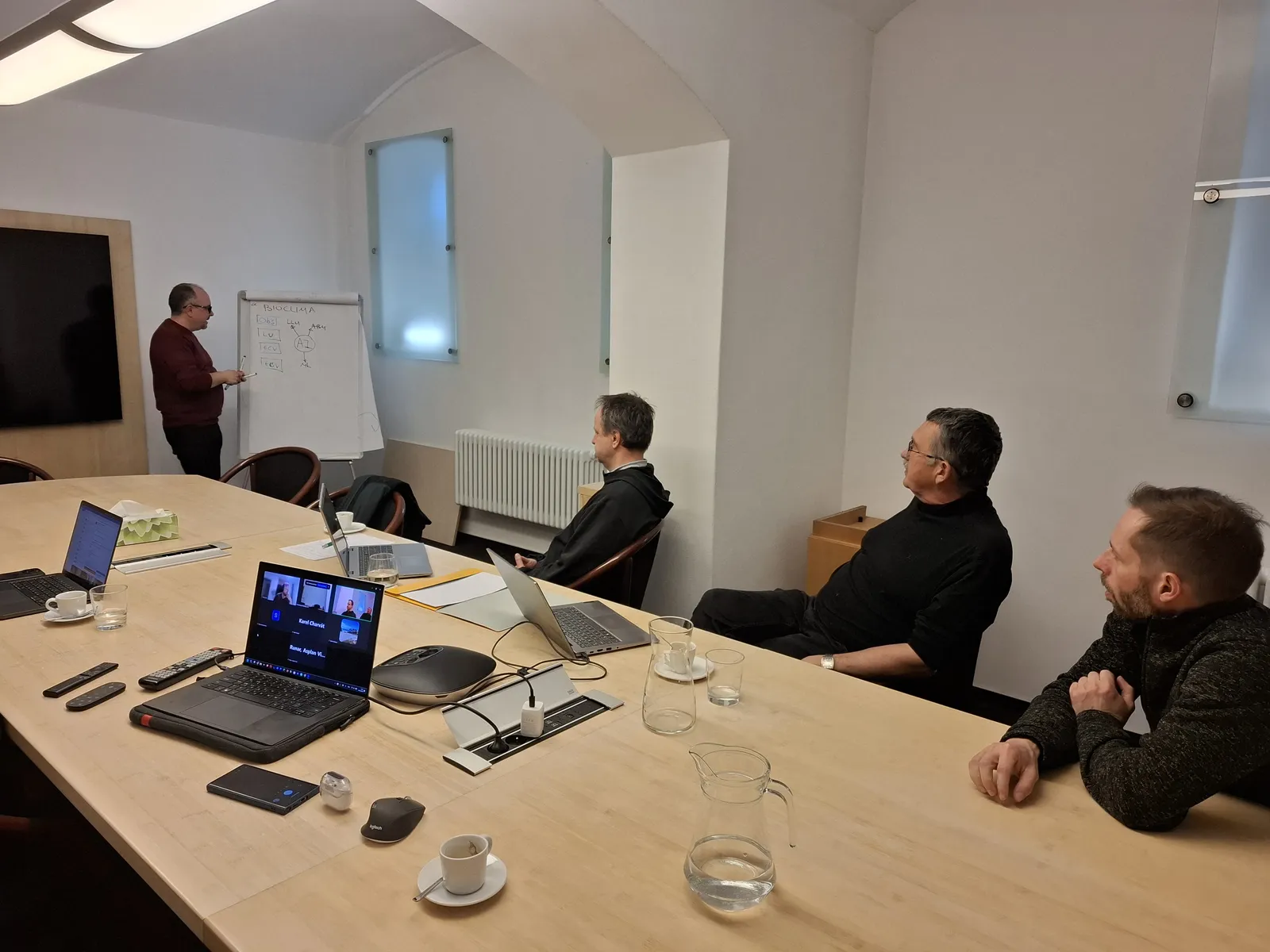
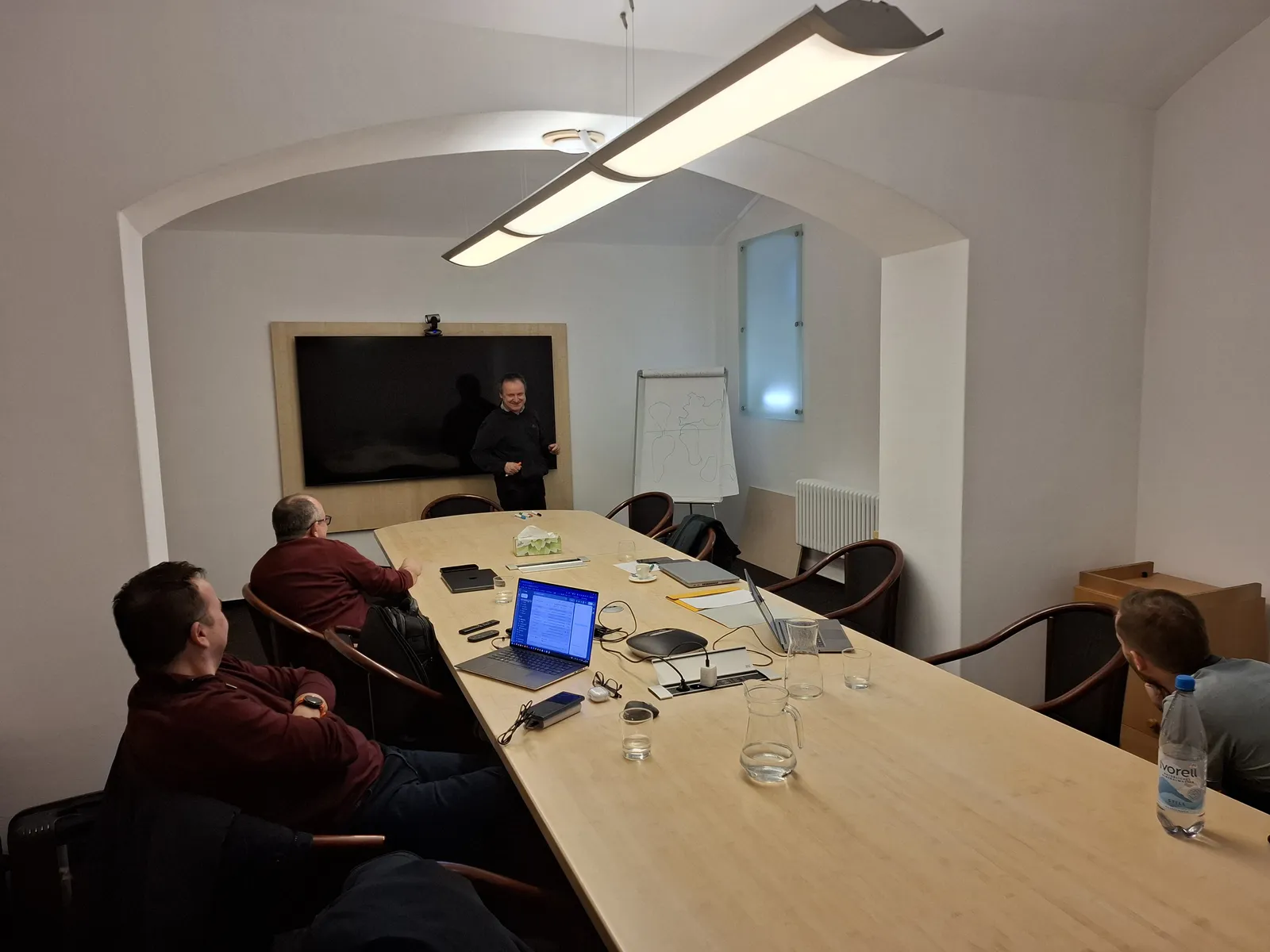
BioClima project partners gathered in Prague for a two-day hybrid meeting on 25 and 26 March 2026, combining in-person and online participation. The meeting focused on reviewing progress in the development of GeoAI tools and the BioClima early warning system, a central component of Work Package 3.
Participants included Karel Charvát, František Zadražil and Filip Leitner (Plan4all, Czech Republic), Stelios Kotsopoulos and Charalampos Paraskevas (NEURALIO AI, Greece), Runar Bergheim (Asplan Viak AS, Norway), and Jiří Sedlák (VSUO, Czech Republic). The discussions reflected the strong international collaboration and shared commitment to building an advanced decision-support platform for climate and ecosystem monitoring.
Progress in GeoAI Integration and Early Warning Development
The meeting highlighted ongoing work on ecological modeling and early warning system design. Advanced methodologies such as stochastic differential equations, agent-based modeling, Markov chain simulations, and Monte Carlo approaches were discussed as key tools for simulating ecosystem dynamics and predicting forest responses to climate change, land use change, and disturbances such as bark beetle infestations.
A live demonstration of the BioClima platform presented its current capabilities, including an interactive dashboard integrating data from seven pilot areas across Europe. The Czech Republic pilot area was discussed in detail, with scenarios examining long-term land use trends, temperature changes, and forest ecosystem impacts using both historical and satellite data.
AI-Powered Data Analysis and User-Friendly Interfaces
Participants reviewed progress in integrating large language models (LLMs) and MCP servers into the platform. These technologies will enable efficient analysis of geospatial and climate data while allowing users to access insights through intuitive queries.
The integration of the Jackdaw interface was also discussed, with the goal of making complex scientific information accessible to non-expert users such as policymakers, forest managers, and regional stakeholders. This will help ensure that BioClima supports practical, data-driven decision-making.
Czech Pilot Scenario Development and Future Work
The team agreed to develop detailed modeling scenarios for the Czech Republic pilot area, focusing on relationships between land use, temperature changes, and species distribution. Incorporating local observational data and expert knowledge will be essential to improving prediction accuracy and strengthening early warning capabilities.
Further work will focus on finalizing the platform architecture, integrating analytical tools, and consolidating requirements from project partners. These steps will support the continued development of a robust GeoAI-driven platform capable of providing reliable early warnings and supporting climate resilience and sustainable forest management.
The hybrid meeting in Prague marked an important milestone in the BioClima project and demonstrated steady progress toward delivering an innovative AI-powered platform for environmental monitoring and decision support.