China–EU BioClima at the 5th International Forum on Big Data for Sustainable Development Goals (FBAS 2025) in Beijing
The BioClima workshop brought together European and Chinese partners to share knowledge and showcase innovative approaches for integrating climate and biodiversity monitoring.
 Sarka Horakova (P4A)
•
Sept. 21, 2025
Sarka Horakova (P4A)
•
Sept. 21, 2025
Title photo: Panel discussion
The 5th International Forum on Big Data for Sustainable Development Goals (FBAS 2025) was held in Beijing from 6–8 September 2025, under the theme “Digital Intelligence Driving Sustainable Development: The 10th Anniversary of the 2030 Agenda.”
As part of the forum, the China–EU BioClima project co-organized a workshop session on Sunday, 7 September (07:30–11:30 CET) within Session A10: Policy and Digital Intelligence Industry Promoting Regional Sustainable Development. The session focused on the theme:
“Improving Monitoring for Better Integrated Climate and Biodiversity Approaches, Using Environmental and Earth Observation.”
Altogether, 23 oral presentations and one roundtable discussion were dedicated to this theme, showcasing advances in biodiversity and climate monitoring. The roundtable “Integration, Innovation and Collaboration: Promoting Research on Biodiversity Conservation and Climate Change Mitigation” further emphasized the importance of scientific exchange and collaboration.
European contributions
Four BioClima partners from Europe presented their work:
- Dr. Charalampos Paraskevas and Dr. Stelios Kotsopoulos (Neuralio A.I., Greece) – GeoAI and multi-agent learning for real-time climate–biodiversity intelligence,
- Dr. Xiang Ma (SINTEF, Norway) – Overview of European biodiversity monitoring sites in the BioClima project,
- Prof. Bob O’Hara (NTNU, Norway) – Big data, big areas and modeling species distributions properly,
- Dr. Ionut Sandric (University of Bucharest, Romania) – Challenges and opportunities in UAV sensor fusion for high-resolution biodiversity mapping.
Chinese contributions
Presentations from Chinese partners covered AI and remote sensing applications, UAV-based biodiversity monitoring, habitat restoration, ex-situ plant conservation, and climate vulnerability assessment, demonstrating the breadth and depth of China’s engagement in BioClima.
Strengthening collaboration
While only selected organisations presented on site in Beijing, the workshop represented the strength of the wider BioClima consortium, which unites Chinese and European universities, research institutes, and companies. Together, the partners are developing harmonised monitoring systems and digital tools that integrate climate and biodiversity strategies, reinforcing the project’s mission to advance long-term EU–China collaboration in support of the UN Sustainable Development Goals.
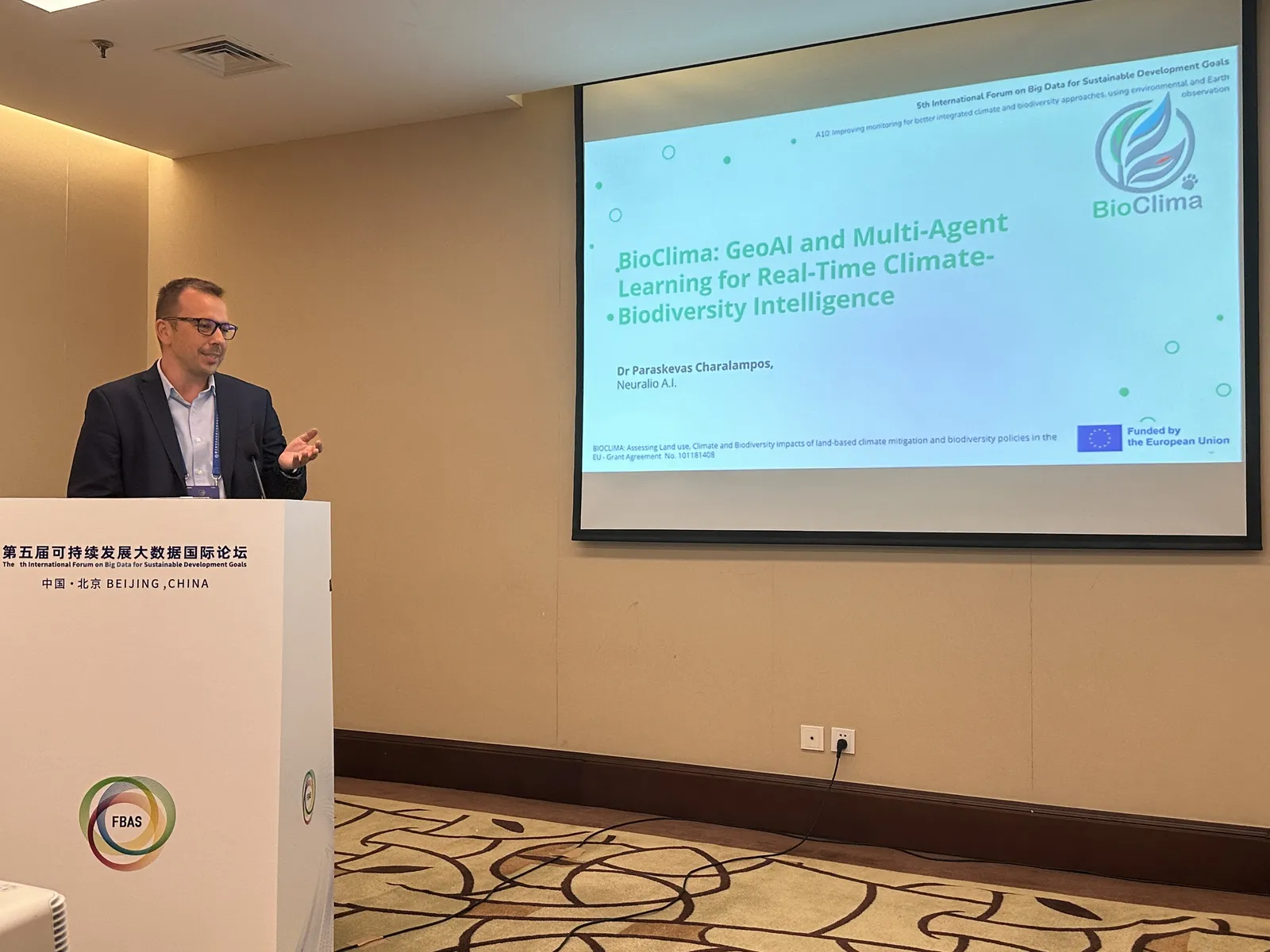
Dr. Charalampos Paraskevas (Neuralio A.I., Greece)
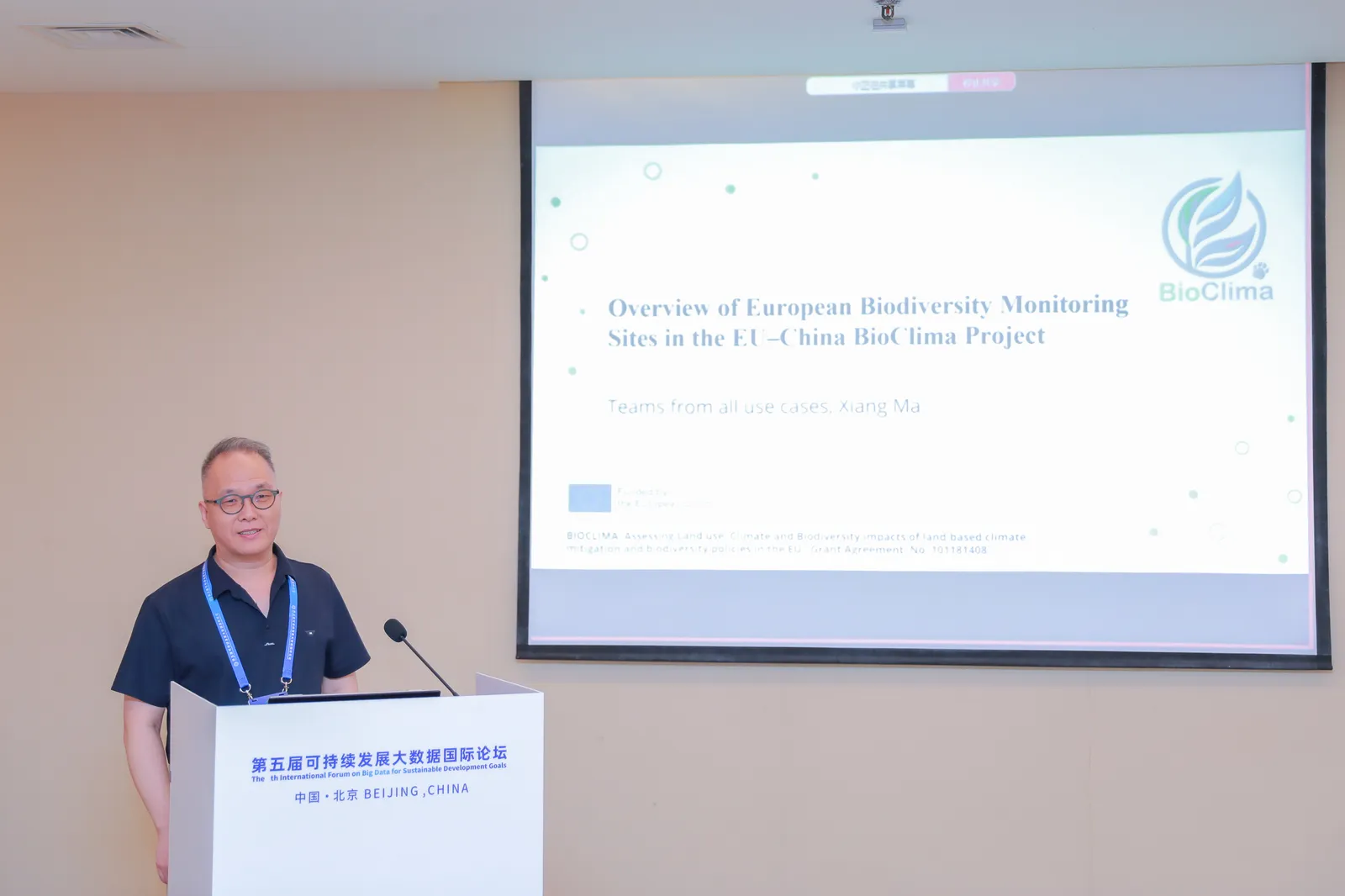
Dr. Xiang Ma (SINTEF, Norway)
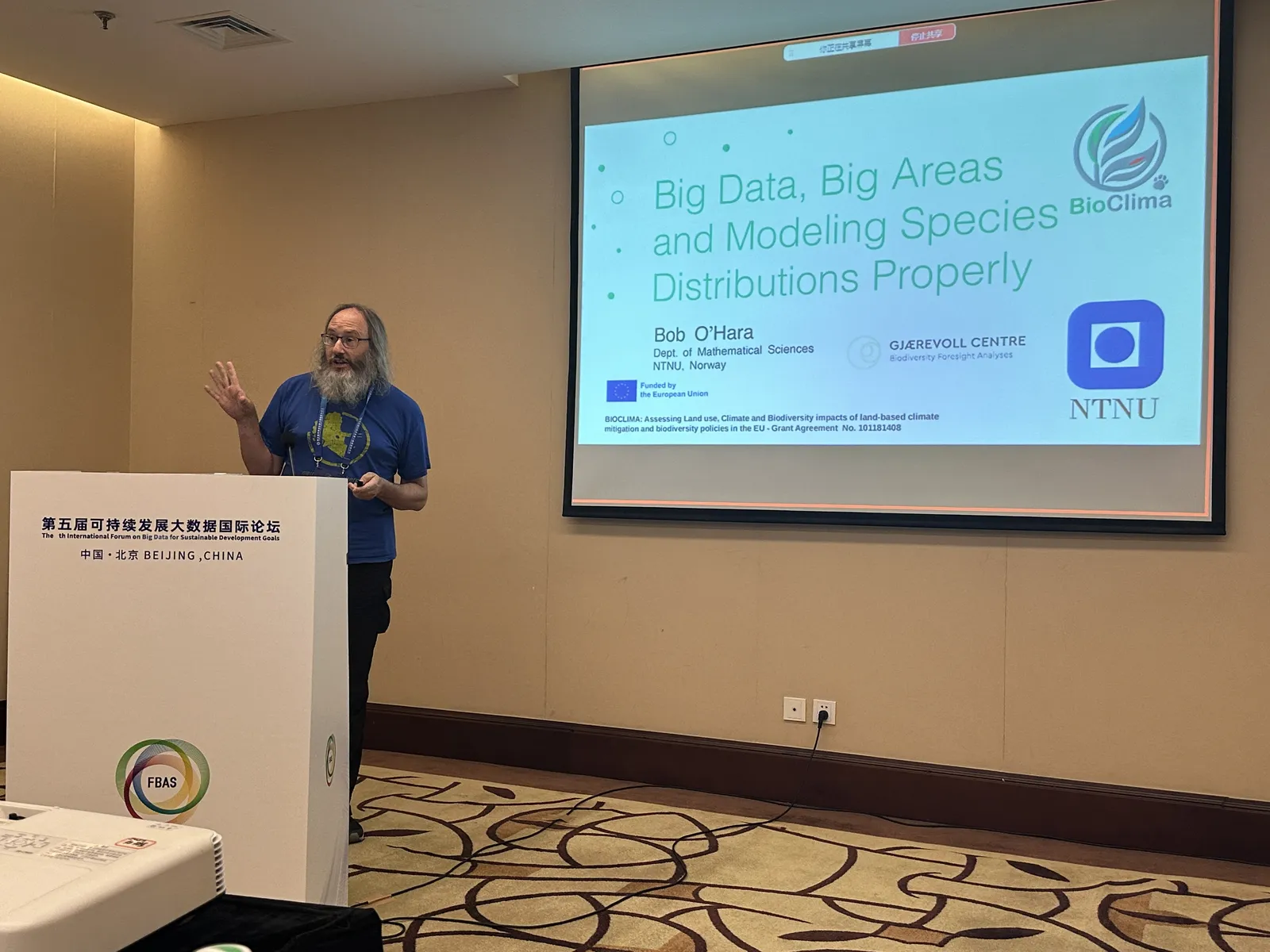
Prof. Bob O’Hara (NTNU, Norway)
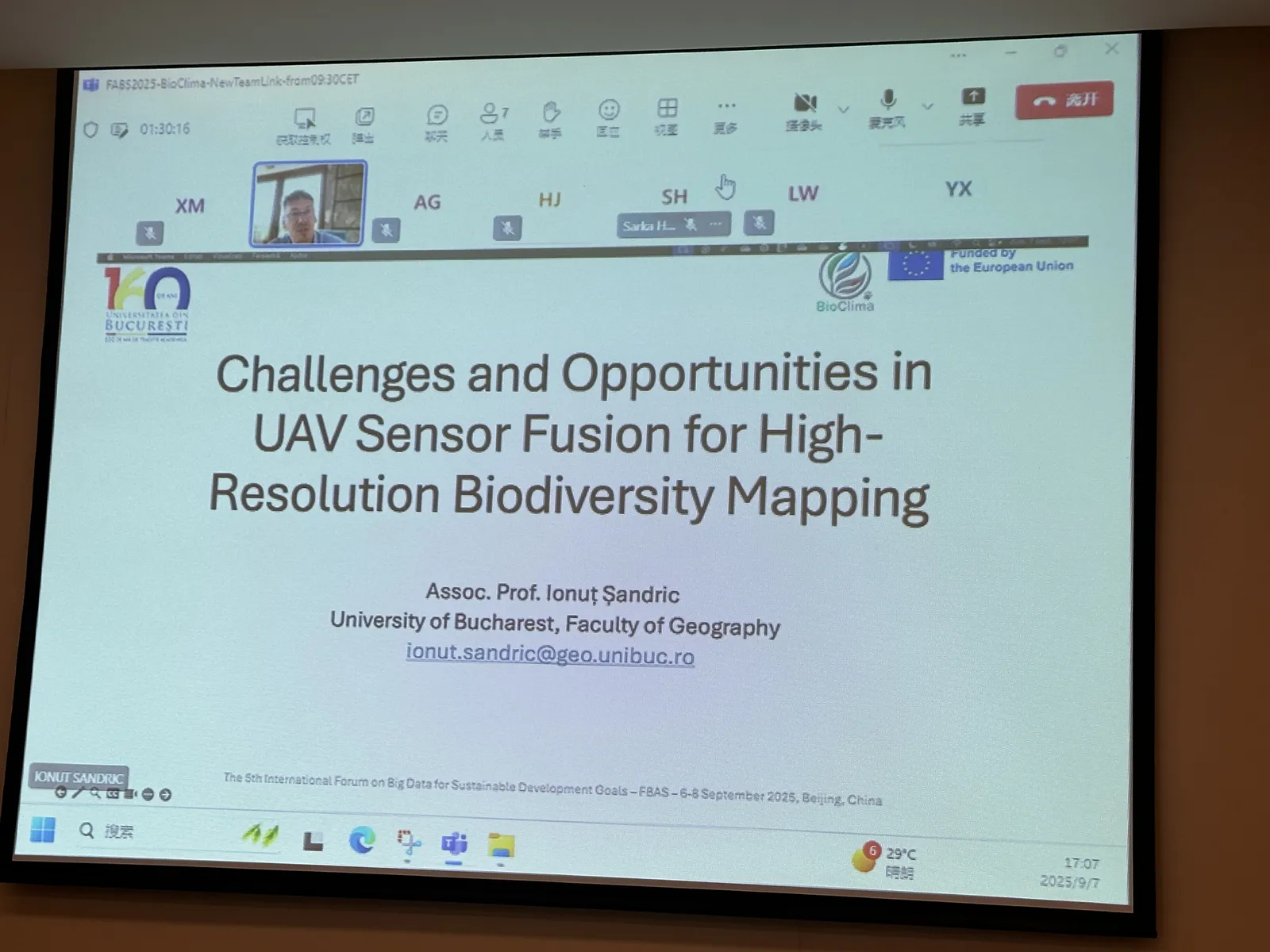
Dr. Ionut Sandric (University of Bucharest, Romania) - online
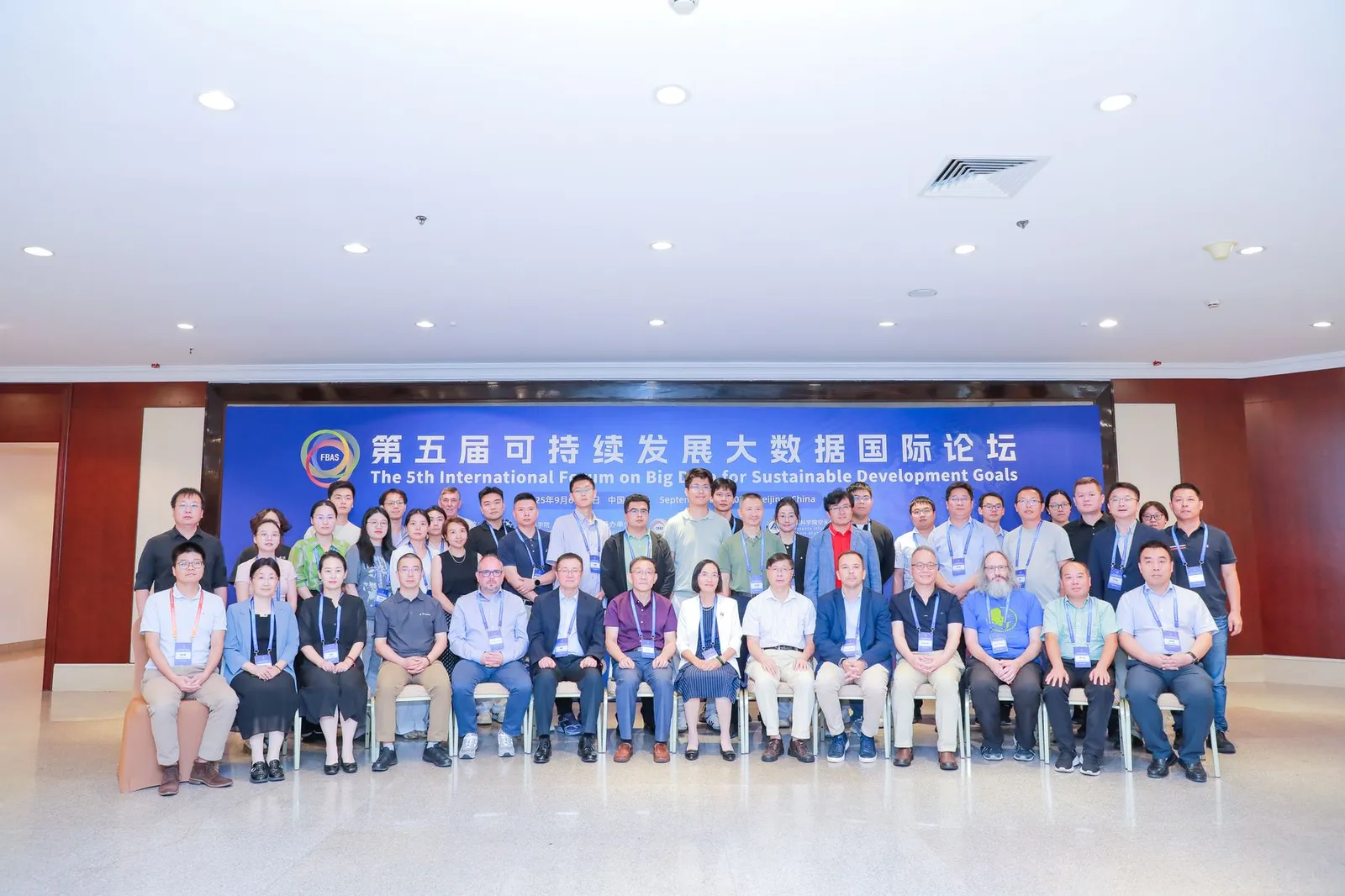
Workshop - group photo