🌿 Meet Our Partners – BioClima Project: 🇧🇪 Open Geospatial Consortium Europe (OGC)
The Open Geospatial Consortium Europe (OGC Europe) leads BioClima’s communication, dissemination, and interoperability strategy, ensuring that biodiversity and climate data can be shared, connected, and reused across Europe and China.
 Mayte Toscano (OGC)
•
May 21, 2026
Mayte Toscano (OGC)
•
May 21, 2026
📍 Leuven, Belgium | 🌐 https://www.ogc.org | https://www.opengeospatial.org
The Open Geospatial Consortium (OGC) is an international community of more than 500 businesses, government agencies, research organisations, and universities working together to make geospatial information and services FAIR – Findable, Accessible, Interoperable, and Reusable. OGC develops royalty-free, publicly available geospatial standards through a member-driven consensus process, and runs an agile collaborative Research and Development programme that builds and tests prototype solutions for real-world location challenges.
In BioClima, the partner is Open Geospatial Consortium Europe (OGC Europe), based in Leuven, Belgium. Its work is delivered through OGC's Collaborative Solutions and Innovation Programme (COSI), which links European research priorities – climate, biodiversity, data spaces, Earth observation, digital twins – to OGC's global standards process. OGC Europe contributes to flagship EU initiatives such as the European Green Deal Data Space, and operates two assets that directly support BioClima: the OGC RAINBOW semantic interoperability platform and the OGC Academy e-learning environment.
Cover photo: OGC presenting BioClima objectives at the FOCAL European Clustering Event (ITA, Zaragoza, Spain).
Role in BioClima
Within BioClima, OGC is the Leader of Work Package 5 – Communication, Dissemination and Multi-Stakeholder Engagement, and builds the project's standards-based digital backbone for integrating Earth observation and biodiversity data across Europe and China. OGC's contribution to BioClima is shaped around four complementary areas of work.
Standards and interoperability for biodiversity and climate observations. OGC develops a broad set of standardised Geospatial Reporting Indicators (GRI) that allow biodiversity and climate information coming from in situ sensors, citizen science, remote sensing and numerical models to be described, discovered and reused in a coherent way. These indicators are aligned with international frameworks such as GEOSS and the GEO Knowledge Hub, and provide the common data language that underpins BioClima's analyses across work packages.
EU–China open-science demonstrator. OGC leads the design of an open-science persistence demonstrator deployed on at least two nodes – one in the EU and one in China – showing the full data pipeline from raw observations to biodiversity knowledge. The architecture is based on OGC API – Processes, the OGC Common Workflow Language (CWL) and OGC Building Blocks, ensuring that BioClima's services are reusable, scalable and FAIR by design.
Assessment of climate change impact on European ecosystems. OGC contributes to BioClima's scientific assessment by synthesising EBV candidates and Geospatial Reporting Indicators to evaluate ecosystem dynamics across European biogeographical regions under climate and land-use change. This work delivers a map of regions and ecosystems most vulnerable to climate-related extremes, providing actionable evidence for policymakers and conservation practitioners.
Innovation events, capacity building and stakeholder engagement. As leader of WP5, OGC drives BioClima's communication and engagement strategy: organising international innovation workshops, presenting the project at major conferences, and coordinating the BioClima Academy – an online capacity-building resource hosted on the OGC Academy platform. This work strengthens EU–China cooperation under the umbrella of the Group on Earth Observations (GEO) and ensures the long-term sustainability of BioClima's results beyond the project's funding period.
Key contributions to BioClima
✅ Standardisation of data pipelines and Geospatial Reporting Indicators for climate and biodiversity monitoring
✅ Implementation of FAIR principles and semantic interoperability via the OGC RAINBOW platform
✅ Architecture of the EU–China open-science demonstrator using OGC API – Processes, CWL and OGC Building Blocks
✅ Alignment of BioClima outputs with GEOSS, GEO Knowledge Hub, GBIF, EuroBON and ChinaBON
✅ Leadership of the project's communication, dissemination and stakeholder engagement strategy
✅ Delivery of the BioClima Academy e-learning platform through the OGC Academy
✅ Hosting of international innovation workshops connecting BioClima with the wider geospatial standards community
Building on OGC's experience
OGC's BioClima contribution draws on a strong portfolio of previous and ongoing initiatives, including H2020 DEMETER (semantic concepts for heterogeneous farm-to-fork data, reused for BioClima's reporting indicators), H2020 NextGEOSS (federated data-hub architecture aligned with GEOSS), H2020 CYBELE (formal interoperability profiles), H2020 e-shape (Earth observation services for decision-makers), and the OGC Climate and Disaster Resilience Pilots, which have shaped the data pipelines from raw observations to actionable climate information that BioClima now extends to biodiversity.
Team behind the work
✅ Mayte Toscano – Project Manager, OGC – BioClima Lead at OGC
✅ Dr Ingo Simonis – Chief Technology Innovation Officer, OGC – senior technical lead
✅ Piotr Zaborowski – Senior Researcher, OGC – interoperability and semantic standards
✅ Dr Joana Simoes – Senior Researcher, OGC – data pipelines and FAIR architectures
Why is BioClima important to OGC?
“BioClima brings together exactly the building blocks that OGC believes should underpin the next generation of environmental information systems – open standards, FAIR data, interoperable workflows and a real EU–China dialogue. By contributing the standards, semantic infrastructure and the BioClima Academy, OGC is helping to make sure that the project’s climate and biodiversity insights are not only scientifically excellent, but also reusable, durable, and ready to inform policy on both continents.”
🧩 OGC Europe builds the digital glue for BioClima – ensuring that biodiversity and climate data can flow, connect, and serve policy and people.
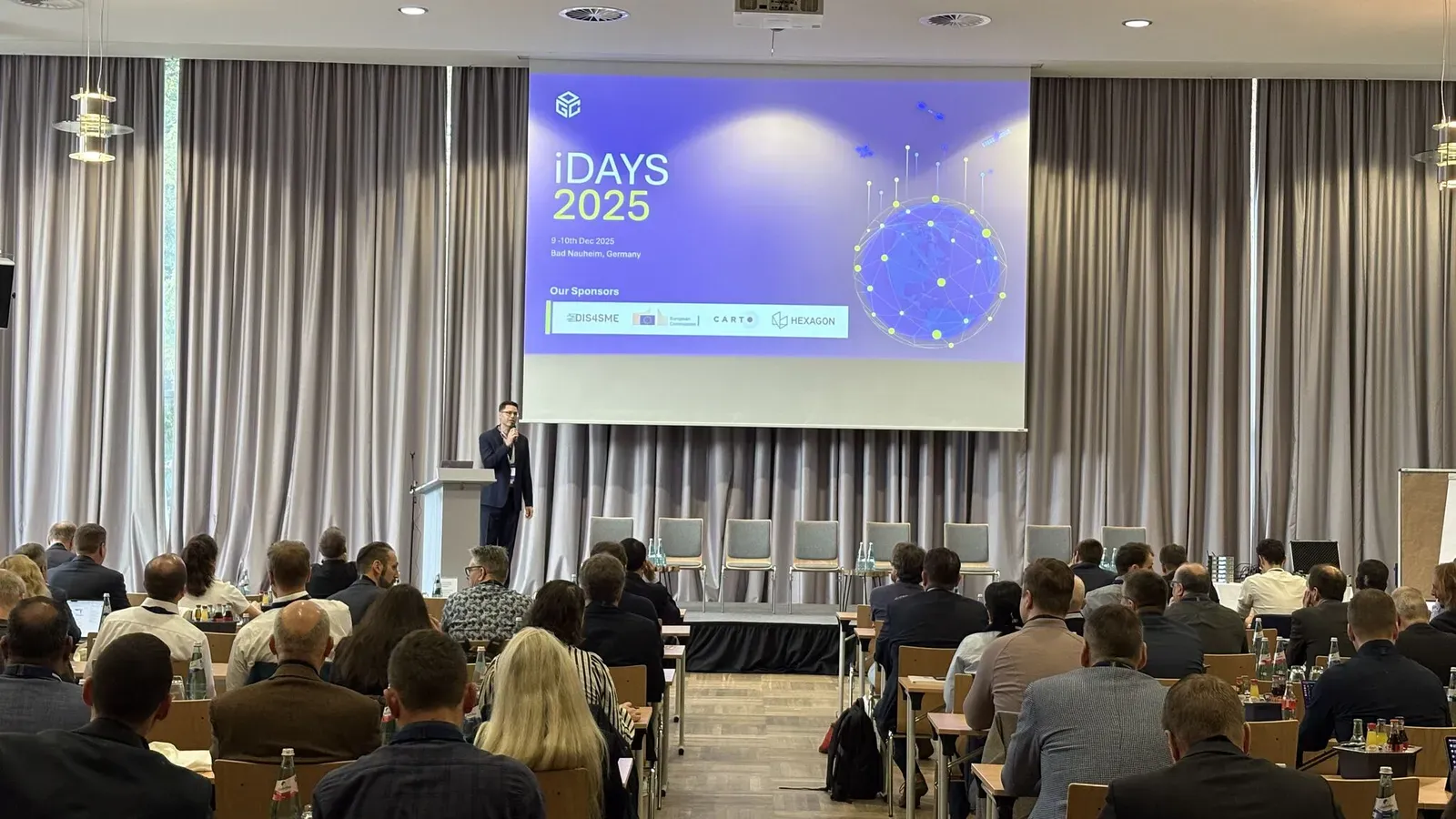
OGC at the iDAYS 2025 international event, sharing BioClima progress with the wider standards community.

OGC Academy – “Skills to deliver interoperability” – the platform that hosts the BioClima Academy (D5.2).
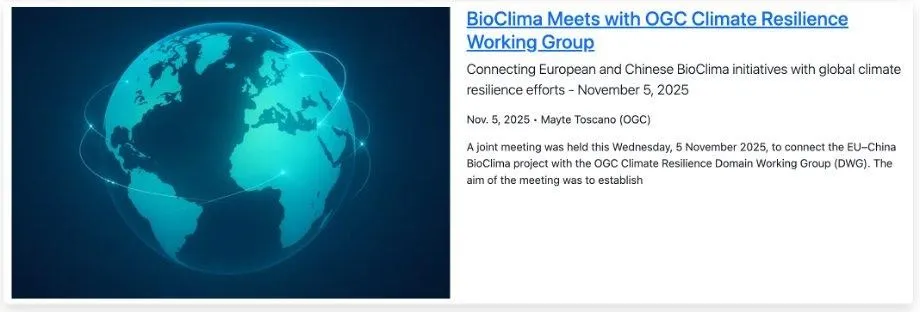
BioClima meets the OGC Climate Resilience Domain Working Group (5 November 2025) – connecting the EU–China BioClima project with OGC’s global climate-resilience community.
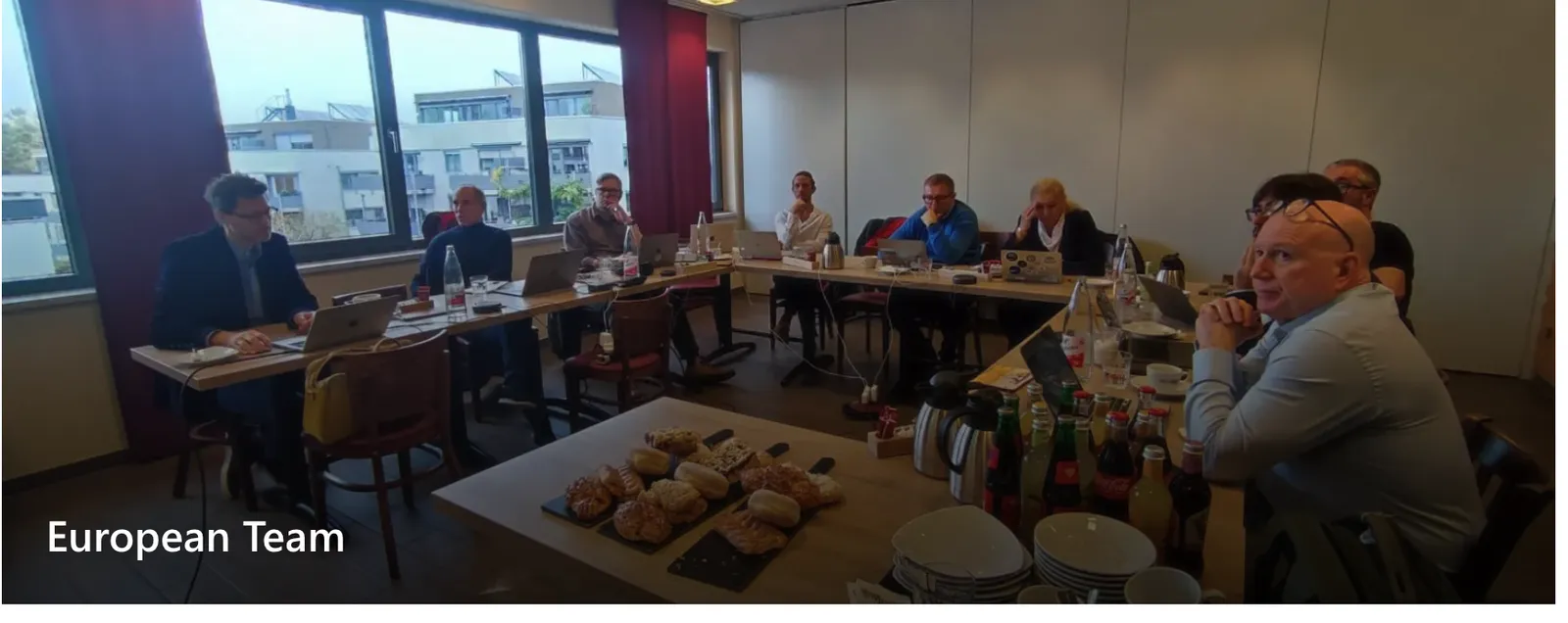
European Team