Symposium in China Advances Integrated Monitoring of Climate Change and Biodiversity
Symposium Promotes Integrated Monitoring of Climate Change and Biodiversity with Environmental and Earth Observation
 Sarka Horakova (P4A)
•
April 23, 2026
Sarka Horakova (P4A)
•
April 23, 2026
Cover photo: Group photo from the symposium. (Image by AIRCAS)
In March 2026, the 2nd Symposium on Enhancing Integrated Monitoring of Climate Change and Biodiversity with Environmental and Earth Observation took place in Wuyishan City, Fujian Province, China. The event was jointly organized by Aerospace Information Research Institute of the Chinese Academy of Sciences (AIRCAS) and the People’s Government of Wuyishan City.
The symposium brought together more than 50 experts, researchers, and representatives from government and industry, covering key areas such as Earth observation, climate change, environmental monitoring, ecology, and biodiversity conservation. Discussions focused on advancing integrated air–space–ground observation systems, strengthening interdisciplinary collaboration, and promoting the practical application of scientific results.
A key outcome of the event was the shared recognition of the importance of integrating advanced technologies—such as artificial intelligence and big data—with ecological research and conservation practices.
Two important locations, Mangdang Mountain and Wuyishan Mountain, were selected as demonstration sites for establishing long-term integrated monitoring systems for climate and biodiversity. These sites are expected to serve as replicable models supporting ecological conservation and sustainable regional development.
During the symposium, the Wuyishan Municipal Forestry Bureau officially authorized the China–EU BioClima project team to conduct field observations on selected forestry sample plots. Representing the BioClima project, LIU Yalan participated in the authorization ceremony. Field pilot activities led by MEI Linlu combined ground-based measurements, drone monitoring, and satellite data to further develop integrated observation approaches in Mangdang Mountain National Nature Reserve and Wuyishan National Park.
The symposium provided a valuable platform for international cooperation and knowledge exchange, strengthening the link between scientific research, environmental governance, and industrial application. These efforts contribute to enhancing the role of advanced Earth observation technologies in biodiversity conservation and climate resilience.
🔗 Read more: http://english.aircas.cas.cn/newsroom/nu/202604/t20260414_1156170.html
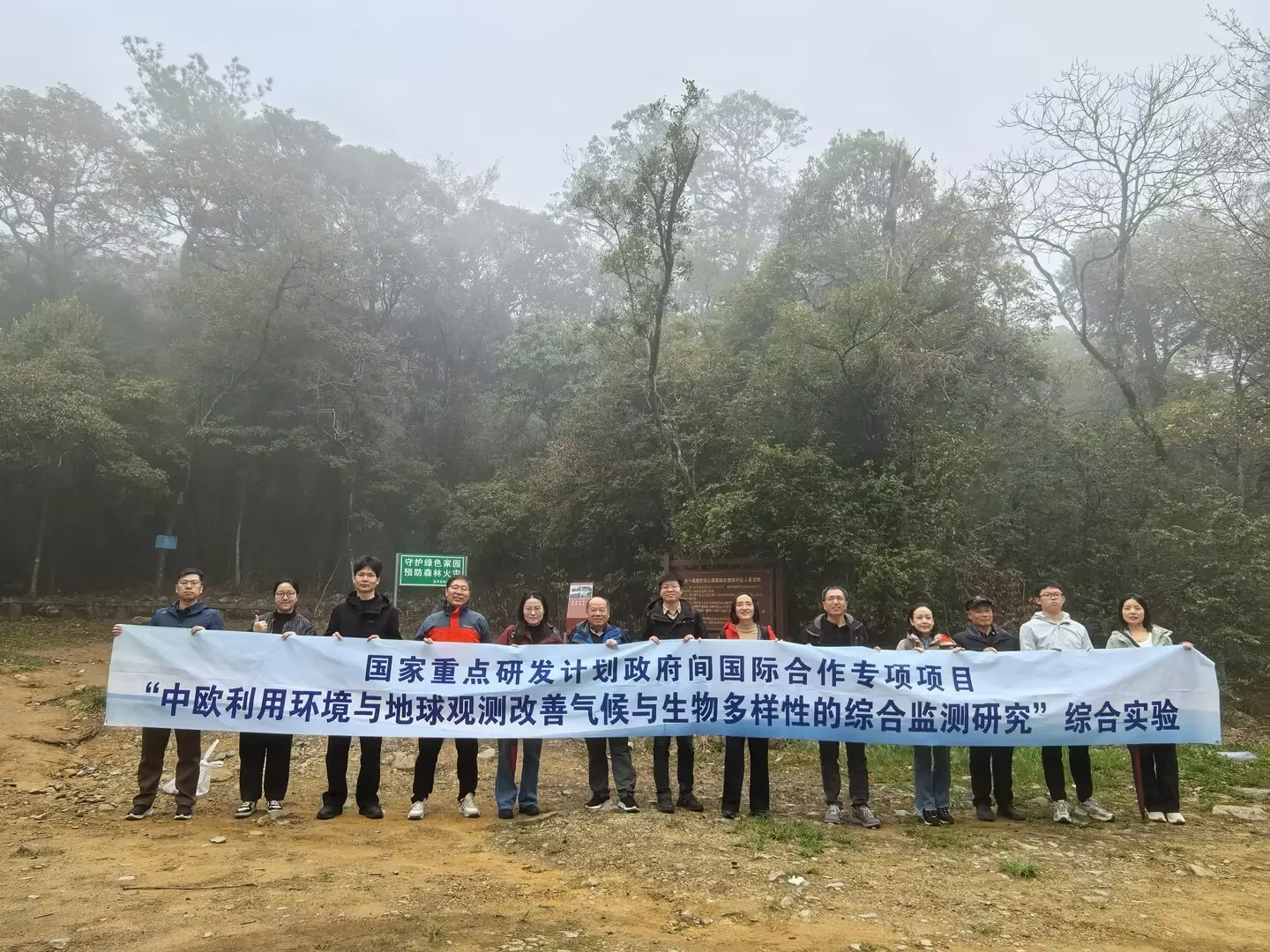
Wuyishan Mountain has been selected as the experimental site by the China-EU Bioclima project team for conducting observations on key forestry sample plots. (Image by AIRCAS)